Hint 1
If B gave C two sweets, everyone would have the same number.
This must mean that the difference between A and B is two sweets, and the difference between B and C is twice that, making four.
Three boys are talking about how many sweets they each have.
A: B has the most! B: If C gave me one sweet, I'd have twice as many as A does. C: It'd be better if B gave me two sweets. Then we'd all have the same amount!
How many sweets are there in total?

If B gave C two sweets, everyone would have the same number.
This must mean that the difference between A and B is two sweets, and the difference between B and C is twice that, making four.
You know from Hint 1 that the difference between A and B is two sweets. You also know that if B got one sweet from C, he would have twice as many sweets as A.
Put these two facts together and you should be able to work out how many sweets A has.
You can work out from Hint 2 that A has three sweets.
That makes it easy to work out how many B has, since you know he has two more!
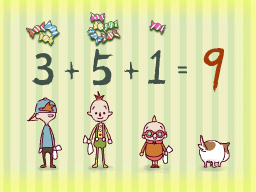
9
That's right! There are nine sweets in total.
The difference between the number of sweets A and B have is two. If B had one more sweet, he would have twice as many as A. Therefore, A + 3 = 2A, which means A has three sweets. B must then have five, as he has one less than twice what A has. If C had two more sweets he would have the same as A, so he must have one.
Hints you open and puzzles you mark solved are kept in this browser.