Hint 1
You need to add up three single-digit numbers to equal a single-digit number.
Think of all the possible equations you can create with the five stamps.
The five numerical stamps shown below are designed to fill in the four blank squares and complete the equation. Only one digit can be used in each square.
Your task is to make a valid equation using the fewest number of stamps to fill all four blank squares.
Pick the stamps you'll use by checking the boxes below them, and then tap Submit.

You need to add up three single-digit numbers to equal a single-digit number.
Think of all the possible equations you can create with the five stamps.
It might sound simple, but when trying to figure out how to use the fewest number of stamps, don't forget that if you use the same stamp multiple times, it still only counts as one stamp.
Three, four, five, six, seven...
This puzzle can't be completed using just these five numbers. Remember, though, that you're not writing the numbers--you're stamping them. So be sure to consider all of the different ways you can use each stamp.
There's no up, down, left, or right to the stamps, despite what you may think.
There's only one stamp, however, that can be rotated 180 degrees to create a different number. If you use that stamp as the answer to the equation, you should solve this puzzle in no time!
Correct!
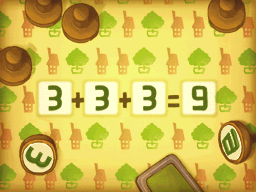
The three and six stamps are all you need! If you turn the six around, it can make a nine. And to equal nine, you simply use the three stamp three times in a row and you're done!
Hints you open and puzzles you mark solved are kept in this browser.