Hint 1
You can't move the key, which is fine, since there's no keyhole to put it in.
But the key is still essential to unlocking the door. Try to determine which aspects of the key may hold a clue to the door itself.
You have the key to this door's lock, but there doesn't seem to be a keyhole.
In fact, the doorknob and the buttons to the right of it move when you touch them. Maybe they form some sort of combination lock...
But then what's the key for?

You can't move the key, which is fine, since there's no keyhole to put it in.
But the key is still essential to unlocking the door. Try to determine which aspects of the key may hold a clue to the door itself.
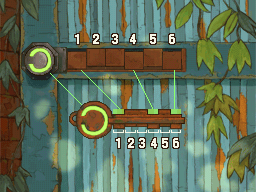
There is a distinct similarity between the design of the door and the design of the key, wouldn't you agree?
The correct orientation for the doorknob is not C.
Consider how the position of the doorknob relates to the buttons on the door. This should give you a clue.
There are six buttons up on the door and six teeth on the key.
So you need to match the buttons with the teeth. Just be careful about the orientation of the key when comparing it to the lock!
Correct!
The "C" on the key represents the doorknob, and the teeth on the side represent the buttons.
Hints you open and puzzles you mark solved are kept in this browser.