Hint 1
Here's a Roman-numeral refresher:
I = 1, II = 2 and III = 3.
IIII, however, does not equal 4.
IV = 4 and V = 5, so the I in front of the V means one less than five.
VI = 6, VII = 7 and VIII = 8.
IX = 9, X = 10 and XI = 11.
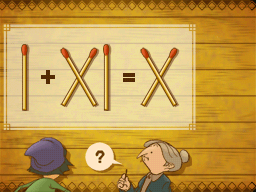
Here's an equation that's been written using matches. Read as Roman numerals, it means: 1 + 11 = 10.
What's the minimum number of matches you need to move to make this equation valid?
Here's a Roman-numeral refresher:
I = 1, II = 2 and III = 3.
IIII, however, does not equal 4.
IV = 4 and V = 5, so the I in front of the V means one less than five.
VI = 6, VII = 7 and VIII = 8.
IX = 9, X = 10 and XI = 11.
The answer should reveal itself if you understand Hint 1 and you're willing to look at things from various points of view.
What Hint 2 is basically telling you is to look at things from different directions...
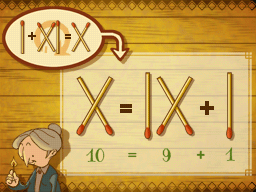
Flip the equation upside down.
Well, would you look at that! You don't need to move any matches at all. The equation is completely valid as it is!
0
You're on fire!
Zero matches is correct.
If you look at the equation upside down, it becomes 10 = 9 + 1 in Roman numerals.
The phrase "minimum number" might have tricked you into thinking "at least one match", but "minimum number" can mean moving no matches at all!
Hints you open and puzzles you mark solved are kept in this browser.