Hint 1
The 2, 1 and 3 are each represented by two brown plates.
The plates for the 2 and 3 look the same, and neither of them look like numbers.
Maybe they're being affixed to the door in some special way?
The numbers for the door of room 2134 in this hotel have mysteriously gone missing. In their place, the management are using long, rectangular plates.
If the 2, 1 and 3 are represented by the plates shown, then which of plates A to D should be used in place of the 4?
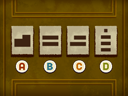
The 2, 1 and 3 are each represented by two brown plates.
The plates for the 2 and 3 look the same, and neither of them look like numbers.
Maybe they're being affixed to the door in some special way?
Did you notice that only the plates to be affixed for the 1 are the same width as the available space?
What would it look like if you put the plates in as they are? A minus sign?
You need to turn them first. That's how you get a 1 out of these plates.
If you affix the plates for the 1 as described in Hint 2, the remaining uncovered space in the square forms the number 1. How could you use the plates for the 2 and 3 to form those numbers in the same way?
And which plates could you use for the number 4?
Form the 2 by putting one of the plates on the left of the square, slightly down from the top, and the other in the diagonally opposite spot. For the 3, place both plates a little apart from each other on the left.
How many plates do you need for the 4? The digit is a cross shape with a diagonal bar, but remember there are two ways of writing it. In any case, you'd probably need more than just one or two plates.
D
Correct!
The answer is D.
Once the plates are affixed within each square, the uncovered space in the square forms the number. That's a handy way of saving on materials!
Hints you open and puzzles you mark solved are kept in this browser.