Hint 1
Had the shoe clerk not gone next door to get change, he might never have realized he lost money.
A woman in a shoe store pays for a pair of $30 shoes with a $50 bill. The clerk doesn't have change, so he goes to the shop next door to break the $50 bill. He then gives the woman her change.
A while later, the clerk next door comes into the shoe store complaining that the bill she got from the shoe clerk was counterfeit. The mortified shoe clerk gives the other shopkeeper a $50 bill of his own in apology. Both the woman with the fake bill and the shoes she took are gone. In total, how much did the shoe-store clerk lose in dollars?
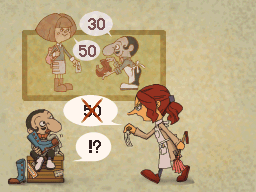
Had the shoe clerk not gone next door to get change, he might never have realized he lost money.
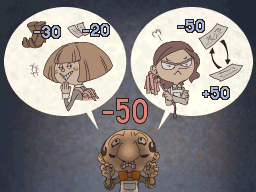
In the end, the shoe clerk essentially passed back the $50 he got from the shopkeeper next door, so he neither lost nor gained money from these interactions.
The sneaky customer ended up getting away with shoes costing $30, as well as $20 in change.
50
Well done!
The shoes the customer made off with cost $30, and the change the shoe clerk gave her cost him $20, bringing the shoe clerk's total losses to $50.
The shoe clerk received $50 in real money when he swapped the fake bill for change but had to return this same $50 when the counterfeit bill was discovered. This means these two transactions effectively cancelled each other out.
Hints you open and puzzles you mark solved are kept in this browser.